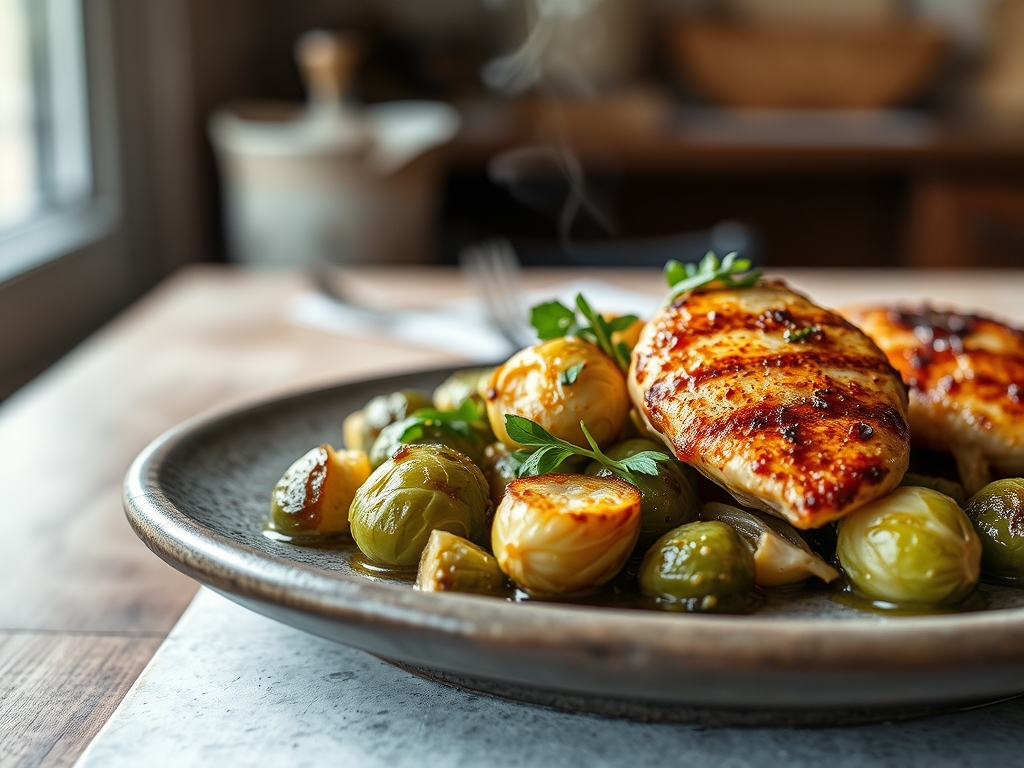
Imagine the sound of a heavy-bottomed skillet meeting a high-flame burner; it is the percussion of a kitchen about to transform humble brassicas into gold. Finding the perfect brussels sprouts and chicken recipes is about mastering the balance between the sulfurous, earthy crunch of the vegetable and the savory, succulent profile of the protein. We are moving far beyond the soggy, boiled sprouts of childhood nightmares into a world of high-heat caramelization and scientific precision.
The secret to these dishes lies in the Maillard reaction. When the natural sugars in the sprouts meet the amino acids in the chicken at temperatures above 300 degrees Fahrenheit, they create hundreds of new flavor compounds. This is not just cooking; it is edible engineering. Whether you are craving a piquant balsamic glaze or a creamy Dijon infusion, the synergy between these two ingredients provides a foundation for high-protein, fiber-rich meals that actually satisfy the soul. We are going to explore ten distinct variations that utilize different textures, from shaved slaw to charred halves, ensuring your weeknight rotation never feels stagnant. Grab your favorite chef's knife and let's get to work on elevating these kitchen staples.
The Gathers:
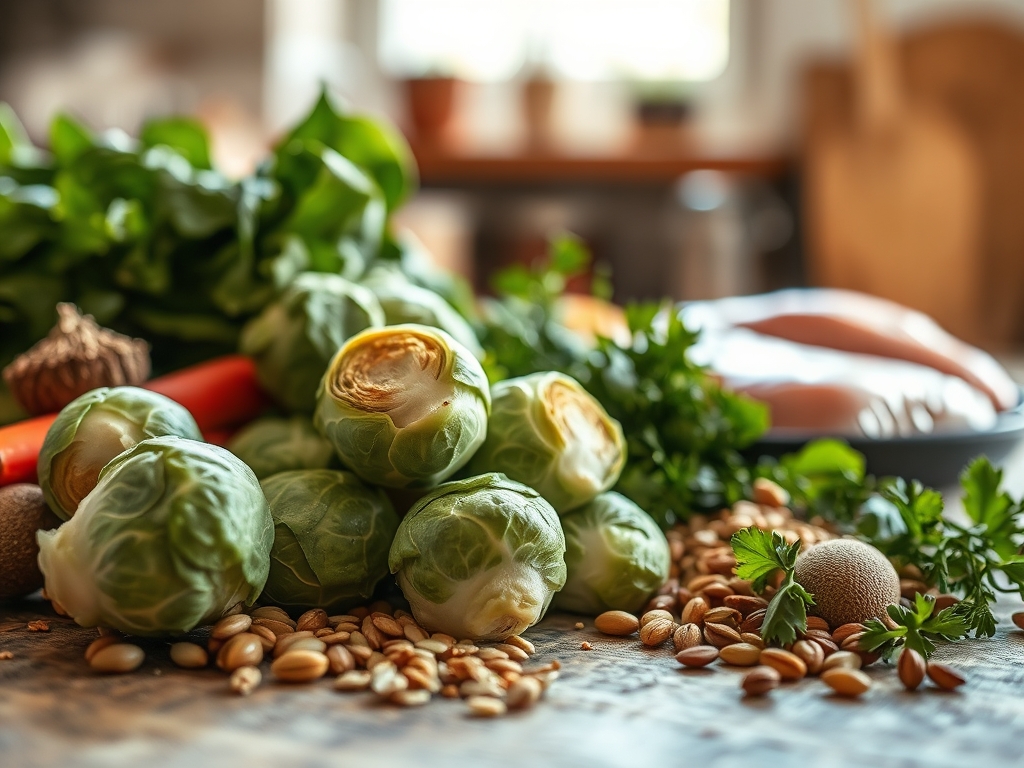
Before we ignite the range, we must curate our mise-en-place. For the ultimate brussels sprouts and chicken recipes, quality starts with the integrity of the cellular structure. Look for sprouts that are tightly furled and heavy for their size; this indicates high moisture content which prevents them from turning into bitter charcoal. For the chicken, organic thighs offer a higher fat content which helps render a natural cooking oil, though breasts work well if you utilize a precise digital scale to ensure they do not overcook.
You will need a high-smoke-point fat like avocado oil or clarified butter. Avoid extra virgin olive oil for the initial sear, as its low smoke point will create acrid flavors. Your aromatics should include fresh garlic, shallots for a delicate sweetness, and perhaps a sprig of rosemary to infuse the fat.
Smart Substitutions:
If you are out of fresh sprouts, frozen ones can work if you roast them directly from frozen at 450 degrees to bypass the "mushy" phase. No chicken? Thick-cut pancetta or smoked tofu provides that necessary umami backbone. If you lack a balsamic glaze, a reduction of apple cider vinegar and honey creates a similar viscous, piquant finish.
The Clock
Efficiency in the kitchen is about "Chef's Flow," the art of overlapping tasks so no heat is wasted. Prep time for these recipes generally clocks in at 15 minutes. This involves the systematic trimming of the sprout stems and the uniform dicing of the chicken to ensure even thermal distribution.
The cook time is where the magic happens, usually requiring 20 to 25 minutes. The flow looks like this: while the chicken sears to develop a crust, you are halving your sprouts. While the sprouts roast, you are whisking your emulsified dressing in a small saucier. By the time the chicken has finished its mandatory five-minute rest, the sprouts are charred and tender. Total time from pantry to table is roughly 40 minutes, making this a professional-grade meal that fits into a chaotic Tuesday.
The Masterclass
1. The Critical Trim and Prep
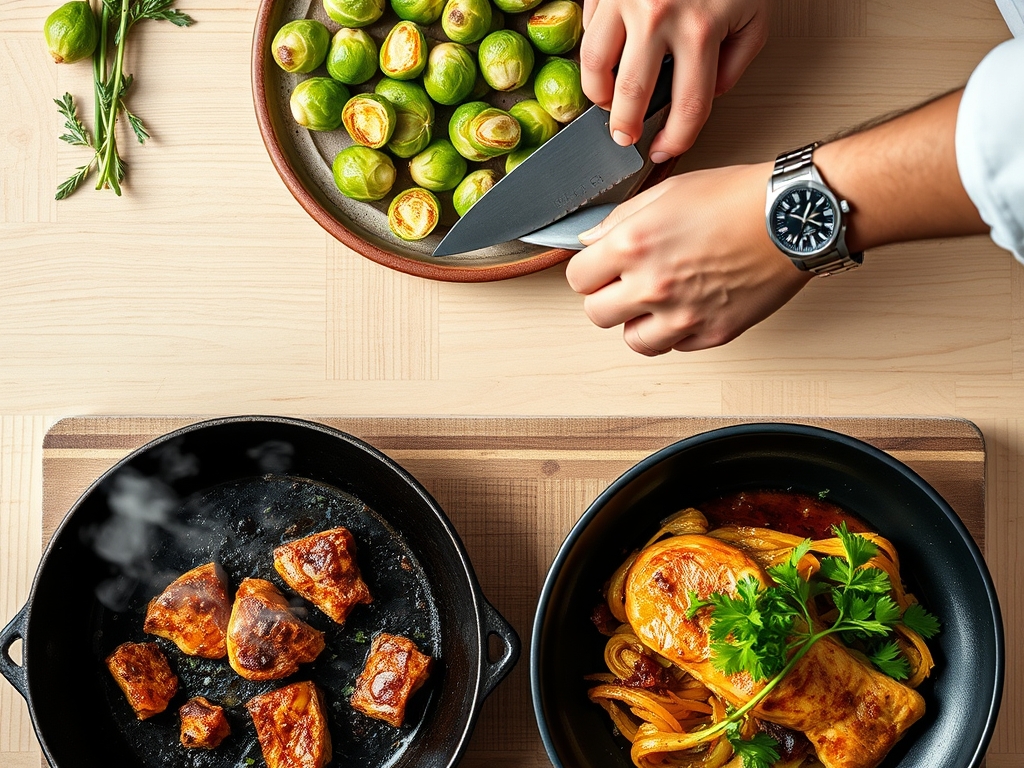
Use a sharp paring knife to remove the woody base of each sprout. If you are making a stir-fry style dish, use a mandoline to shave them into a fine slaw. For roasting, simply halve them through the poles. Pat your chicken extremely dry with paper towels.
Pro Tip: Moisture is the enemy of the sear. Surface water on the chicken or sprouts will create steam, leading to a grey, flaccid texture rather than enzymatic browning.
2. Rendering and Searing
Heat your heavy-bottomed skillet until a drop of water dances and evaporates instantly. Add your fat, then place the chicken skin-side down. Do not crowd the pan; crowding drops the temperature and halts the caramelization process.
Pro Tip: Use stainless steel or cast iron. These materials have high thermal mass, meaning they won't lose heat when the cold ingredients hit the surface, ensuring a consistent Maillard reaction.
3. The Sprout Char
Remove the chicken once it reaches an internal temperature of 160 degrees. In the same pan, place the sprouts cut-side down into the rendered chicken fat. This allows the vegetables to absorb the savory drippings while the flat surface area develops a deep, nutty crust.
Pro Tip: This is "Fond Management." The brown bits stuck to the pan (the fond) are concentrated flavor bombs. The moisture from the sprouts will help loosen these bits, integrating them into the vegetable's exterior.
4. The Deglaze and Emulsify
Once the sprouts are tender, use a splash of white wine, chicken stock, or lemon juice to deglaze the pan. Use a wooden spoon or bench scraper to lift the remaining caramelized proteins from the bottom.
Pro Tip: Adding a cold knob of butter at the very end and whisking vigorously will aerate the sauce and create a glossy, stable emulsion that clings to the chicken.
5. The Final Rest and Assembly
Return the chicken to the pan just to warm through, then remove everything from the heat. Let the dish sit for three minutes before serving.
Pro Tip: Thermal carryover means the chicken will continue to rise in temperature by 5 degrees after leaving the pan. Pulling it early ensures the breast meat remains juicy rather than stringy.
The Deep Dive
Macro Nutrition:
A standard serving of these brussels sprouts and chicken recipes is a powerhouse. You are looking at approximately 35g of protein, 8g of fiber, and a wealth of Vitamin K and C. By controlling the added fats, you can keep the caloric density between 400 and 550 calories per serving.
Dietary Swaps:
For a Keto version, increase the healthy fats by adding avocado or a heavy cream reduction. For Vegan enthusiasts, swap the chicken for crispy chickpeas or tempeh and use coconut aminos instead of honey. To keep it Gluten-Free, simply ensure your chicken stock and spices are certified, as some thickeners contain hidden wheat.
The Fix-It:
- Bitter Sprouts: If the dish tastes too sharp, add a squeeze of honey or a sprinkle of pomegranate seeds. The sugar offsets the glucosinolates (the bitter compounds).
- Soggy Texture: This happens if the pan was too full. Next time, roast the sprouts on a preheated sheet tray in the oven to ensure maximum airflow.
- Dry Chicken: If you overshot the temp, shred the meat and toss it in a viscous sauce like a lemon-tahini dressing to restore moisture.
Meal Prep Science:
To maintain "day-one" quality, store the chicken and sprouts in airtight glass containers. When reheating, avoid the microwave if possible; it vibrates water molecules too fast, making the chicken rubbery. Instead, use a toaster oven at 350 degrees to recrisp the sprout leaves.
The Wrap-Up
Mastering brussels sprouts and chicken recipes is a rite of passage for any home cook looking to marry health with high-end flavor. By respecting the science of the sear and the importance of the deglaze, you turn basic ingredients into a restaurant-quality experience. Remember: keep your pan hot, your chicken dry, and your sprouts charred. Now, get into that kitchen and show those brassicas who is boss!
The Kitchen Table
How do I stop brussels sprouts from smelling?
The "sulfur" smell comes from overcooking. High-heat roasting or quick sautéing prevents the breakdown of sinigrin into smelly sulfur compounds. Always cook them fast and hot to keep the scent nutty and sweet rather than pungent.
Can I use frozen chicken for these recipes?
Yes, but thaw it completely in the refrigerator first. Excess ice crystals will melt in the pan, steaming the meat instead of searing it. Pat the thawed meat dry with paper towels to ensure a proper golden crust.
What is the best way to cut brussels sprouts?
For roasting, cut them in half lengthwise through the stem to keep the leaves attached. For salads or quick sautés, use a microplane or mandoline to shave them into fine ribbons, which increases surface area for flavor absorption.
Why is my chicken sticking to the pan?
Chicken usually sticks because the pan isn't hot enough or you are trying to flip it too soon. The meat will naturally release from the surface once a proper crust has formed through the Maillard reaction. Be patient.