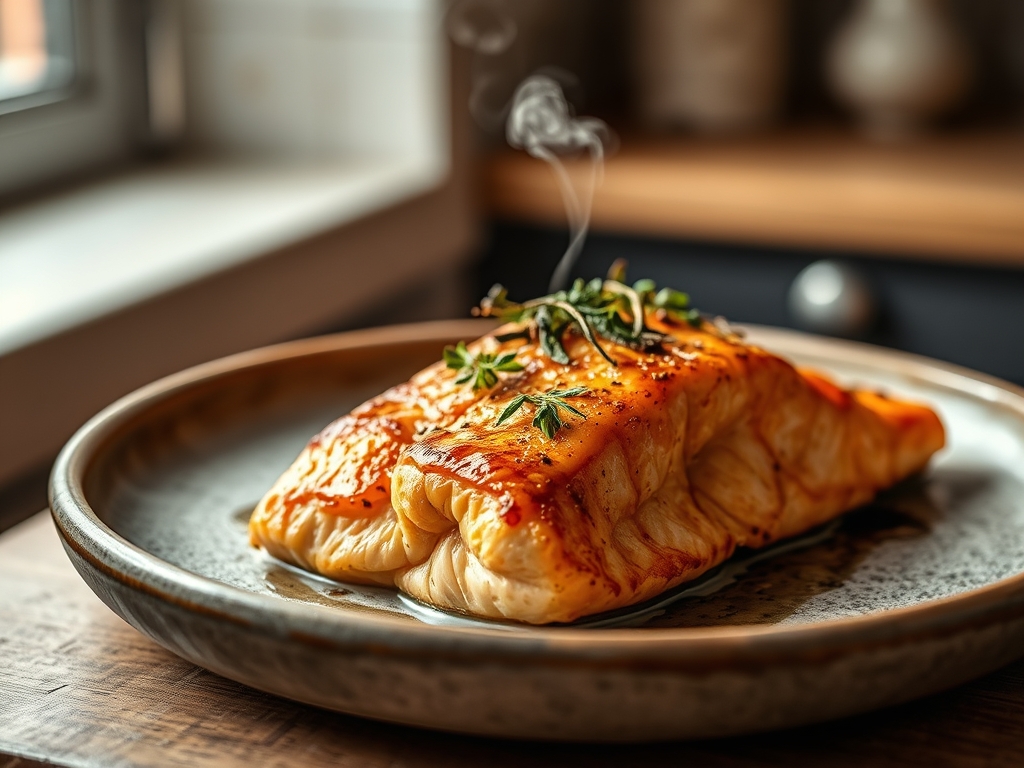
Picture a kitchen filled with the scent of charred citrus and the earthy hum of garlic. The skin of the fish crackles as it hits the cast iron; a sound like static electricity that promises a perfect crust. When searching for authentic haitian salmon recipes, you are looking for more than just a meal. You are looking for the collision of French technique and Caribbean soul. This is about the deep, vibrating heat of scotch bonnet peppers balanced by the cooling acidity of lime. We are moving beyond the basic pan-sear into a world where every bite is a lesson in flavor layering. We are talking about salmon that has been marinated until the fibers are saturated with epis, then seared to achieve a glass-like exterior while the interior remains buttery and translucent. It is a high-wire act of temperature control and aromatic infusion that transforms a standard fillet into a centerpiece worthy of a Port-au-Prince feast.
The Gathers:
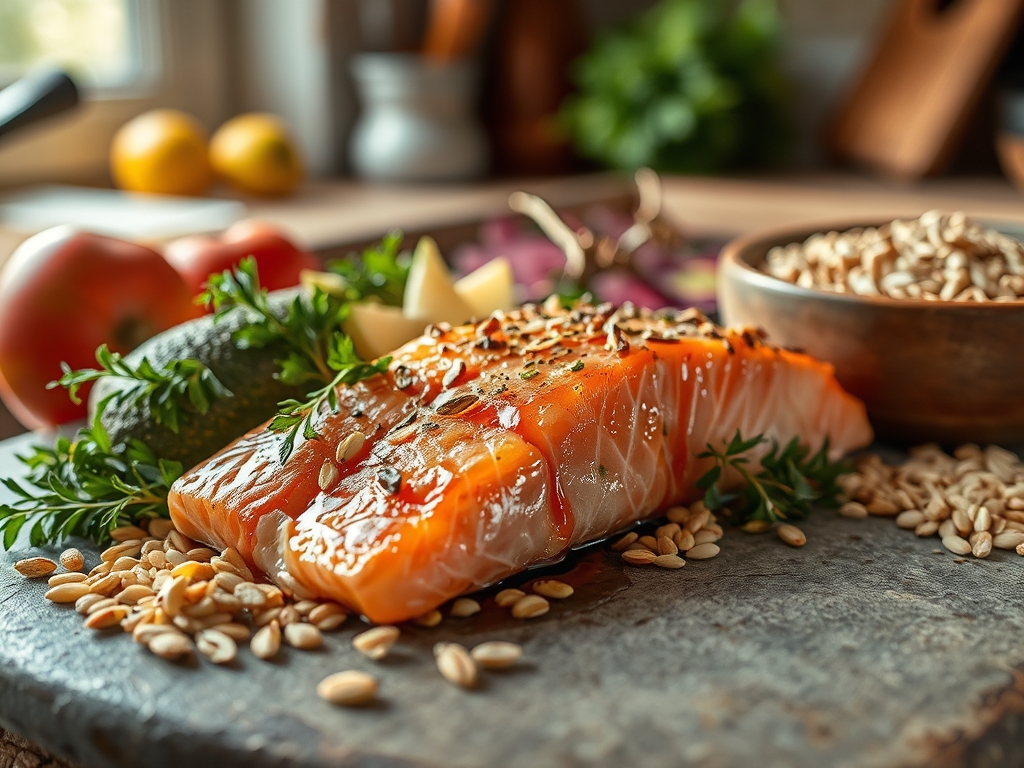
To execute this masterpiece, your mise-en-place must be precise. Start with high-quality Atlantic or King salmon fillets; look for deep pigmentation which indicates a higher astaxanthin content. You will need a microplane for zesting and a heavy-bottomed skillet (preferably carbon steel or seasoned cast iron) to ensure even heat distribution.
The heart of the dish is the Haitian Epis. Gather fresh parsley, scallions, garlic cloves, and bell peppers. You will also need cloves, which provide that signature medicinal warmth, and a high-smoke-point oil like avocado or grapeseed. Do not use extra virgin olive oil for the sear; its low smoke point will result in acrid, burnt polyphenols.
Smart Substitutions: If scotch bonnets are too aggressive for your palate, use habaneros for a similar fruity profile but slightly less capsaicin intensity. If you are out of fresh lime, a splash of bitter orange juice (Seville orange) is the traditional Haitian secret for cutting through the fatty lipids of the fish. Use a digital scale to measure your salt; 1.5 percent of the fish weight is the "golden ratio" for perfect seasoning.
The Clock
Efficiency in the kitchen is about understanding the "Chef's Flow." Total active prep time is 20 minutes, primarily focused on the emulsification of the marinade. The salmon requires a 30-minute rest in the refrigerator to allow the acids to denature the surface proteins slightly, which aids in crust formation.
The actual cook time is remarkably fast: 4 to 6 minutes on the skin side and a mere 60 to 90 seconds on the flesh side. This rapid transition requires your full attention. Always allow for a 5-minute rest post-heat. This allows the internal juices, which have been pushed toward the center by the heat, to redistribute back toward the edges, ensuring every forkful is succulent rather than dry.
The Masterclass:
1. The Epis Emulsification
Combine your aromatics in a mortar and pestle or small food processor. You want a viscous paste, not a watery liquid. Pulse the garlic, peppers, and herbs until they form a vibrant green sludge.
Pro Tip: This step utilizes enzymatic browning prevention. By adding a touch of oil during the grind, you coat the herb particles, preventing oxygen from turning your bright green marinade into a dull brown.
2. The Desiccant Dry
Use paper towels to pat the salmon skin until it is bone-dry. This is the most critical step for texture. If there is moisture on the skin, the heat of the pan will turn it into steam, resulting in rubbery skin rather than a crisp "cracker" finish.
Pro Tip: This facilitates the Maillard reaction. Water is the enemy of browning; by removing surface moisture, the proteins and sugars can react immediately at 300 degrees Fahrenheit without waiting for steam to evaporate.
3. The Acid Bath
Rub the flesh side of the salmon with your lime juice and Epis. Let it sit for no more than 30 minutes. Any longer and the acid will begin to "cook" the fish like a ceviche, changing the flake structure before it even hits the pan.
Pro Tip: This is a form of denaturation. The acid begins to break down the tight protein coils, allowing the flavors of the garlic and cloves to penetrate deeper into the muscle fibers.
4. The Cold-Pan Start (Optional) or High-Heat Sear
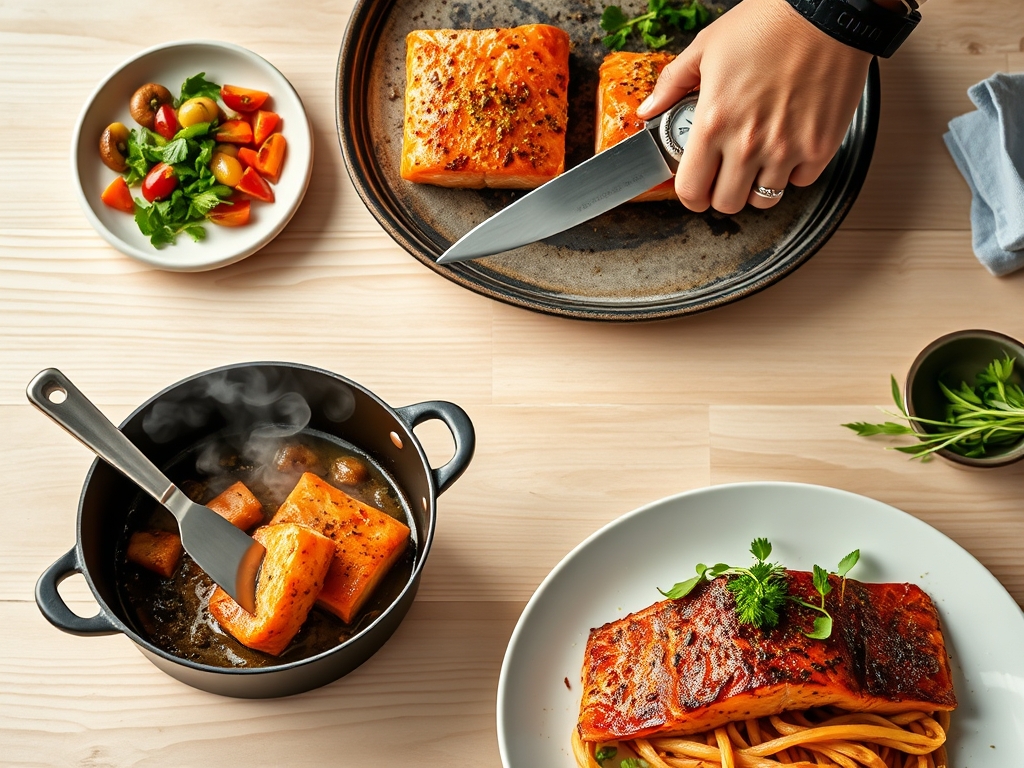
Place the salmon skin-side down in a cold pan and then turn the heat to medium-high. This allows the fat beneath the skin to render slowly, leading to an incredibly even crispness. Use a fish spatula to press down firmly for the first 30 seconds.
Pro Tip: Pressing the fish prevents the protein fibers from curling as they contract from the heat. This ensures maximum surface area contact with the skillet for a uniform golden hue.
5. The Butter Baste
During the final minute of cooking, drop a tablespoon of unsalted butter and a crushed garlic clove into the pan. Tilt the skillet and use a saucier spoon to repeatedly drench the salmon in the foaming fat.
Pro Tip: This is thermal carryover management. The hot butter gently finishes the top of the fish without the harsh direct heat of the pan, keeping the center a perfect medium-rare.
6. The Deglaze
Once the fish is removed, the pan will be covered in "fond" (browned bits). Pour in a splash of white wine or chicken stock and use a bench scraper or wooden spoon to lift those flavors.
Pro Tip: Deglazing creates a rapid emulsion of the pan fats and the added liquid, resulting in a concentrated pan sauce that captures the essence of the Haitian spices.
The Deep Dive
Salmon is a nutritional powerhouse, loaded with Omega-3 fatty acids and high-quality protein. One 6-ounce fillet provides roughly 34 grams of protein and 100 percent of your daily Vitamin B12.
Dietary Swaps: For a Vegan alternative, use thick "steaks" of cauliflower or lion's mane mushrooms, applying the same Epis marinade. For Keto diners, this recipe is naturally perfect; just ensure your marinade doesn't include added sugars. For Gluten-Free requirements, ensure your spices are certified, as some pre-mixed powders use flour as an anti-caking agent.
The Fix-It:
- Skin sticking to the pan? You likely tried to flip it too early. The fish will naturally "release" once the proteins have fully caramelized.
- White "stuff" oozing out? This is albumin. It means the heat was too high too fast. Lower the flame to prevent the muscle fibers from contracting so violently that they squeeze out the protein.
- Bland interior? You skipped the 30-minute marinade. Salt needs time to migrate via osmosis into the center of the fillet.
Meal Prep: To reheat salmon without it becoming "fishy" or dry, avoid the microwave. Use a low-temperature oven (275 degrees Fahrenheit) with a splash of water in the dish, covered with foil. This creates a gentle steam chamber that revives the lipids without oxidizing the fats.
The Wrap-Up
Mastering haitian salmon recipes is about respecting the ingredients and the physics of the pan. It is a dish that feels celebratory yet remains grounded in the practical magic of Caribbean aromatics. When you pull that shimmering, spice-crusted fillet from the skillet, you aren't just serving dinner; you are serving a story of cultural fusion. Grab your tongs, trust your thermometer, and let the heat do the work. Your kitchen is now the best bistro in town.
The Kitchen Table
Can I use frozen salmon for this recipe?
Yes, but thaw it completely in the refrigerator first. Use paper towels to remove all excess moisture. Frozen fish often releases more water, so a dry surface is even more vital for achieving a proper sear and avoiding a soggy texture.
What is the best way to tell if salmon is done?
Use a digital thermometer to check for an internal temperature of 125 to 130 degrees Fahrenheit for medium-rare. The flesh should be opaque and flake easily with a fork when gently pressed near the center of the fillet.
How do I make my Epis more authentic?
Authentic Epis relies on fresh herbs and the inclusion of cloves. Do not skip the scallions or the bell peppers. Using a mortar and pestle instead of a blender creates a superior texture by crushing the fibers rather than slicing them.
What side dishes pair best with Haitian salmon?
Traditionally, serve this with Diri Ak Pwa (Rice and Beans) or fried plantains (Banan Peze). The sweetness of the plantains provides a structural contrast to the piquant, savory notes of the Epis-marinated salmon, creating a balanced and satisfying plate.