
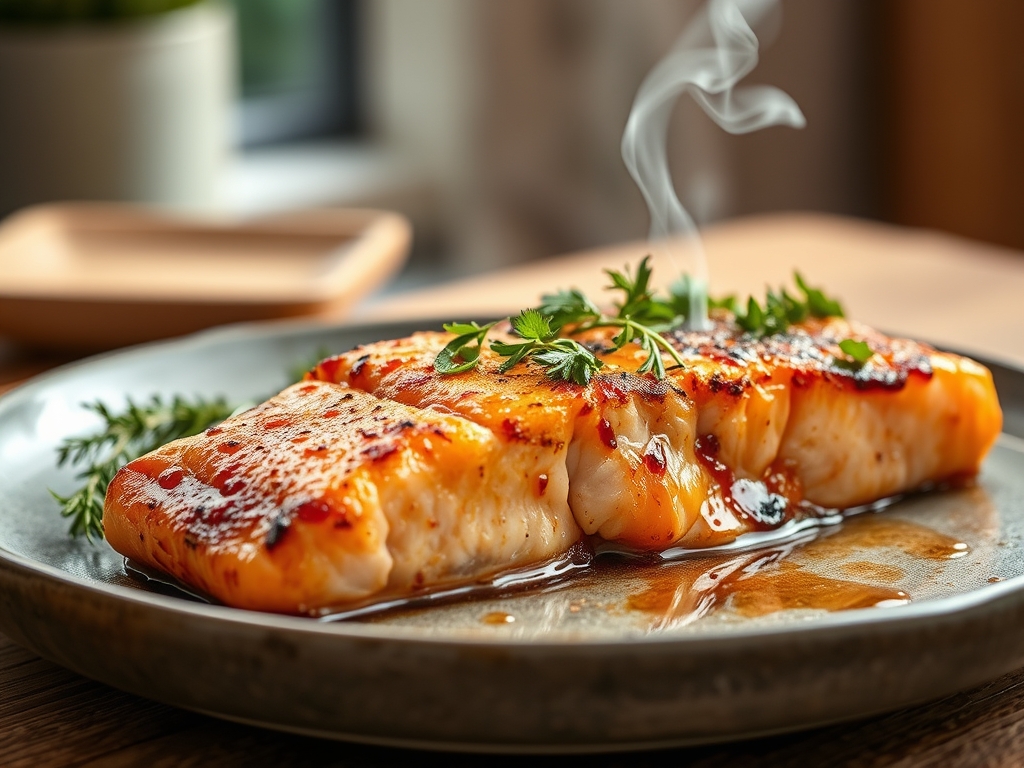
The smell of searing fat hitting a heavy-bottomed skillet is the universal siren song of a kitchen that knows what it is doing. If you have ever stared at a raw fillet and felt a wave of existential dread, you are not alone. Mastering easy salmon recipes for beginners is less about innate talent and more about understanding the molecular transition of protein from translucent to opaque. We are aiming for that glass-skin shatter on the outside and a buttery, medium-rare center that flakes with the mere suggestion of a fork. Forget the rubbery, overcooked slabs of your past; we are about to apply thermal dynamics to dinner.
Salmon is the ultimate "gateway" fish because its high lipid content makes it incredibly forgiving. Unlike lean white fish that can turn into sawdust if you look at it wrong, salmon carries enough intramuscular fat to buffer against a few extra seconds of heat. By the time we are done, you will be treating your kitchen like a laboratory and your dinner plate like a canvas. Let us break down the alchemy of the perfect sear and the science of the marinade.
The Gathers:
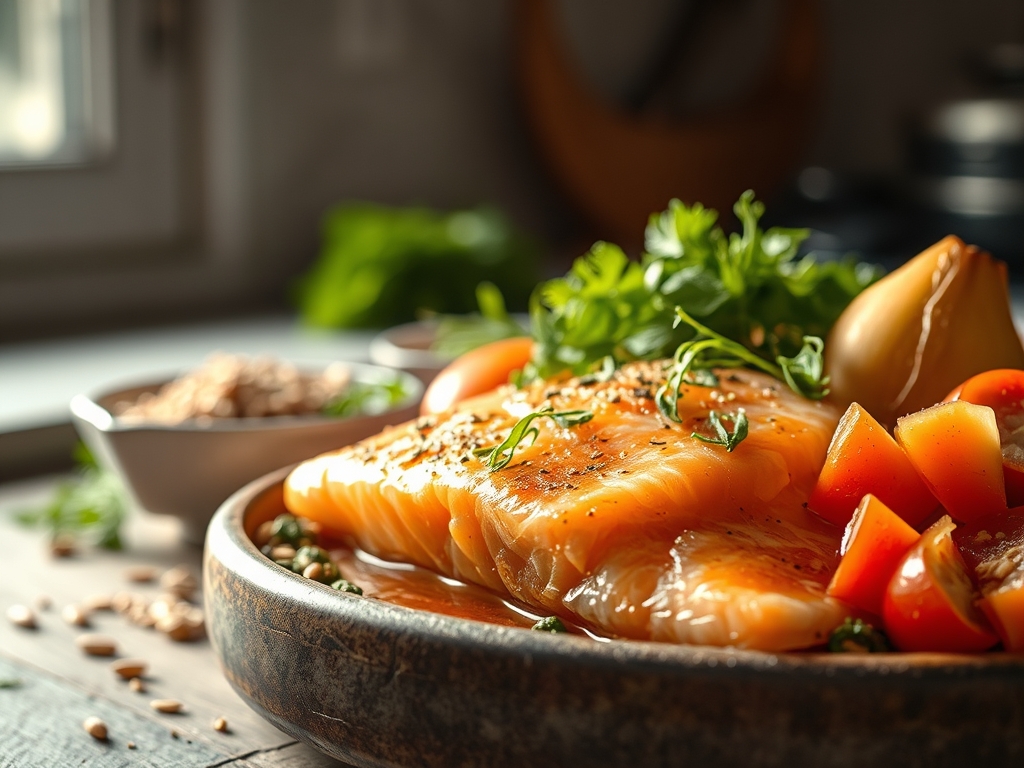
Before you even think about igniting a burner, your mise-en-place must be flawless. Professional chefs use a bench scraper to organize their workspace, ensuring no stray moisture interferes with the cooking process. You will need high-quality salmon fillets, preferably center-cut for uniform thickness. Look for vibrant color and a firm texture; if it leaves an indentation when pressed, the cellular structure is beginning to break down.
Your aromatics are equally vital. Gather fresh dill, garlic cloves, and a bright lemon. You will want a microplane to harvest the zest without hitting the bitter white pith. For the fat, choose an oil with a high smoke point like avocado or grapeseed oil. Butter is delicious but its milk solids burn at low temperatures; we will use it only for the final basting phase to add a nutty, viscous finish.
Smart Substitutions: If you are out of fresh lemons, a splash of rice vinegar provides the necessary acidity to cut through the rich lipids. No fresh dill? Dried tarragon offers a similar anise-like profile that complements the fish beautifully. If you are avoiding dairy, a spoonful of white miso paste whisked into your oil creates a deep, savory umami crust that mimics the browning of butter.
The Clock
Efficiency in the kitchen is governed by the Chef's Flow, which is the art of overlapping tasks so nothing sits idle. For these easy salmon recipes for beginners, the total active prep time is exactly twelve minutes. You spend five minutes on the "cold prep" (patting dry and seasoning) and seven minutes on the "heat phase."
The "rest phase" is non-negotiable. You must allow the fish to sit for three to five minutes after it leaves the pan. This allows for thermal carryover, where the internal temperature continues to rise while the muscle fibers relax, trapping the juices inside. If you cut into it immediately, the moisture escapes and you are left with a dry fillet. Plan for a twenty-minute total cycle from fridge to table.
The Masterclass
1. The Moisture Purge
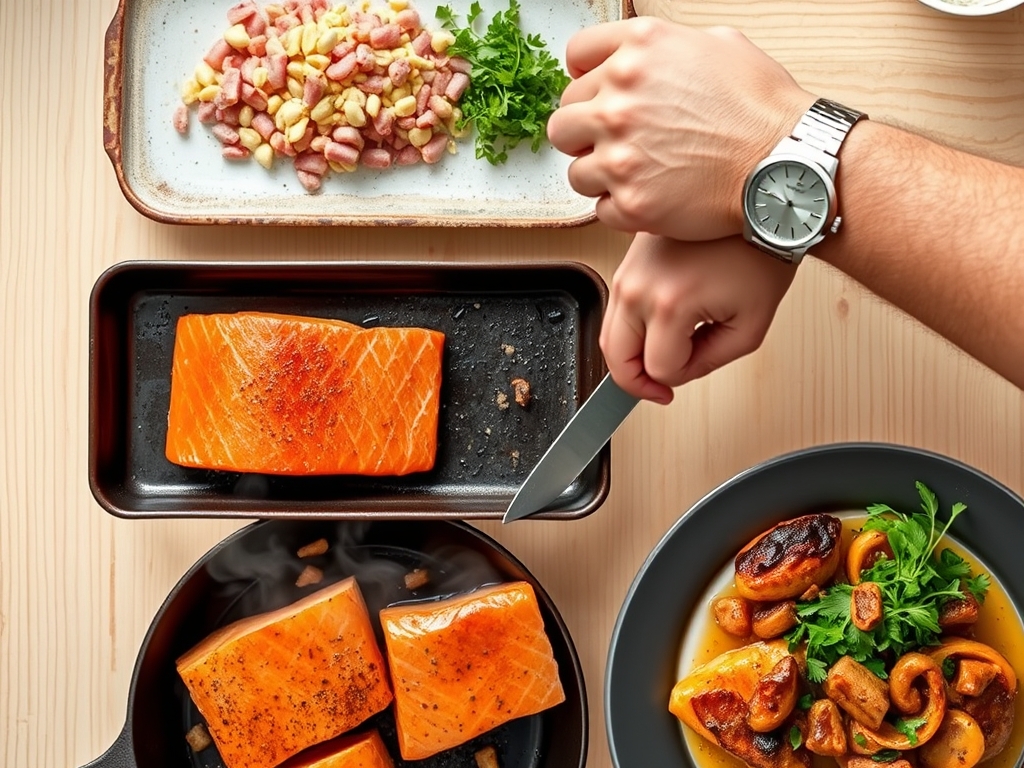
Use a paper towel to aggressively pat the skin side of the salmon until it is bone dry. Moisture is the enemy of the Maillard reaction, the chemical process that creates that savory brown crust. If the surface is wet, the fish will steam rather than sear.
Pro Tip: This is known as surface dehydration. By removing water, you allow the heat to immediately begin reacting with the proteins and sugars rather than wasting energy evaporating surface liquid.
2. The Seasoning Bond
Generously coat the flesh with kosher salt and cracked black pepper from a height of six inches. This ensures an even distribution of particles. Do not season too early, as salt is an osmotic agent that will draw internal moisture to the surface, ruining your sear.
Pro Tip: Salt denatures the proteins on the surface, creating a "tacky" texture that helps the crust form. Only season immediately before the fish hits the pan.
3. The Cold Start Myth
Heat your heavy-bottomed skillet over medium-high heat until the oil shimmers and barely begins to smoke. You want the pan to have high thermal mass. When the fish hits the metal, you should hear a loud, aggressive hiss.
Pro Tip: This is the Leidenfrost effect in action. A thin layer of vapor forms between the fish and the pan, preventing it from sticking while the heat works its magic.
4. The Skin-Down Lockdown
Place the salmon skin-side down and use a flexible fish spatula to press it firmly against the pan for thirty seconds. This prevents the skin from curling as the collagen fibers contract. Leave it alone for at least four minutes.
Pro Tip: Pressing the fish ensures maximum surface contact, leading to a uniform render of the subcutaneous fat layer, which results in potato-chip-crispy skin.
5. The Butter Baste
Flip the fish using tongs and immediately drop a knob of butter, smashed garlic, and herbs into the pan. Tilt the skillet and use a large spoon to continuously pour the foaming butter over the cooked skin.
Pro Tip: This is called arrosé. The hot fat carries the fat-soluble compounds from the garlic and herbs directly into the fissures of the meat, infusing it with flavor.
The Deep Dive
From a nutritional standpoint, salmon is a powerhouse of Omega-3 fatty acids and high-quality protein. One six-ounce fillet provides roughly 34 grams of protein and 100% of your daily Vitamin B12. It is a biological fuel source that supports cognitive function and reduces inflammation.
Dietary Swaps: For a Keto-friendly version, serve alongside a heavy cream and caper reduction. For a Vegan "salmon" experience, many chefs use marinated, scored carrots or watermelon, though the texture focuses more on the piquant marinade than the protein structure. For Gluten-Free needs, ensure your soy sauce is replaced with tamari when making glazes.
The Fix-It:
- The Albumin Leak: If you see white goo seeping out, you have overcooked the fish. The muscle fibers have contracted so tightly they are squeezing out the protein (albumin). Fix: Pull the fish off the heat 10 degrees earlier next time.
- The Sticky Skin: If the skin stays in the pan, the pan wasn't hot enough or you tried to flip it too soon. Fix: Wait for the fish to "self-release" once the crust is fully formed.
- The Raw Center: If the outside is burnt but the inside is cold, your heat was too high. Fix: Finish the fish in a 300-degree oven for three minutes to gently reach the target internal temp.
Meal Prep Science: To reheat salmon without the "fishy" smell, avoid the microwave. The microwave agitates water molecules and overheats the delicate fats. Instead, use a low-temperature oven (275 degrees) with a splash of water covered in foil to create a gentle steam chamber.
The Wrap-Up
You are now equipped with the technical prowess to turn a simple piece of seafood into a culinary masterpiece. Remember that cooking is just delicious physics. By controlling moisture, managing heat, and respecting the rest period, you have mastered the foundational pillars of easy salmon recipes for beginners. Go forth, grab your saucier, and deglaze that pan with confidence. Your kitchen is no longer a place of mystery; it is your laboratory.
The Kitchen Table
How do I know when the salmon is done?
The most reliable method is using a digital thermometer to check for an internal temperature of 125 to 130 degrees Fahrenheit for medium-rare. Alternatively, the fish should flake easily with a fork and appear opaque rather than translucent.
Why does my salmon always stick to the pan?
Sticking usually occurs if the pan is not hot enough or if the fish is still damp. Ensure you pat the skin dry and wait for the oil to shimmer before adding the protein to create a proper sear.
Can I cook salmon straight from the freezer?
It is not recommended. For the best texture, thaw the salmon in the refrigerator overnight. Cooking from frozen results in an uneven temperature distribution, leaving the outside overcooked and the center icy or raw.
What is the best way to season salmon?
Keep it simple with kosher salt and cracked pepper to start. After searing, you can deglaze the pan with lemon juice, butter, and fresh herbs like dill or parsley to create a bright, acidic pan sauce.